
Completion of International Conference
FOOD IN THE ANTHROPOCENE:
ECOTHEOLOGICAL AND SCIENTIFIC PERSPECTIVES
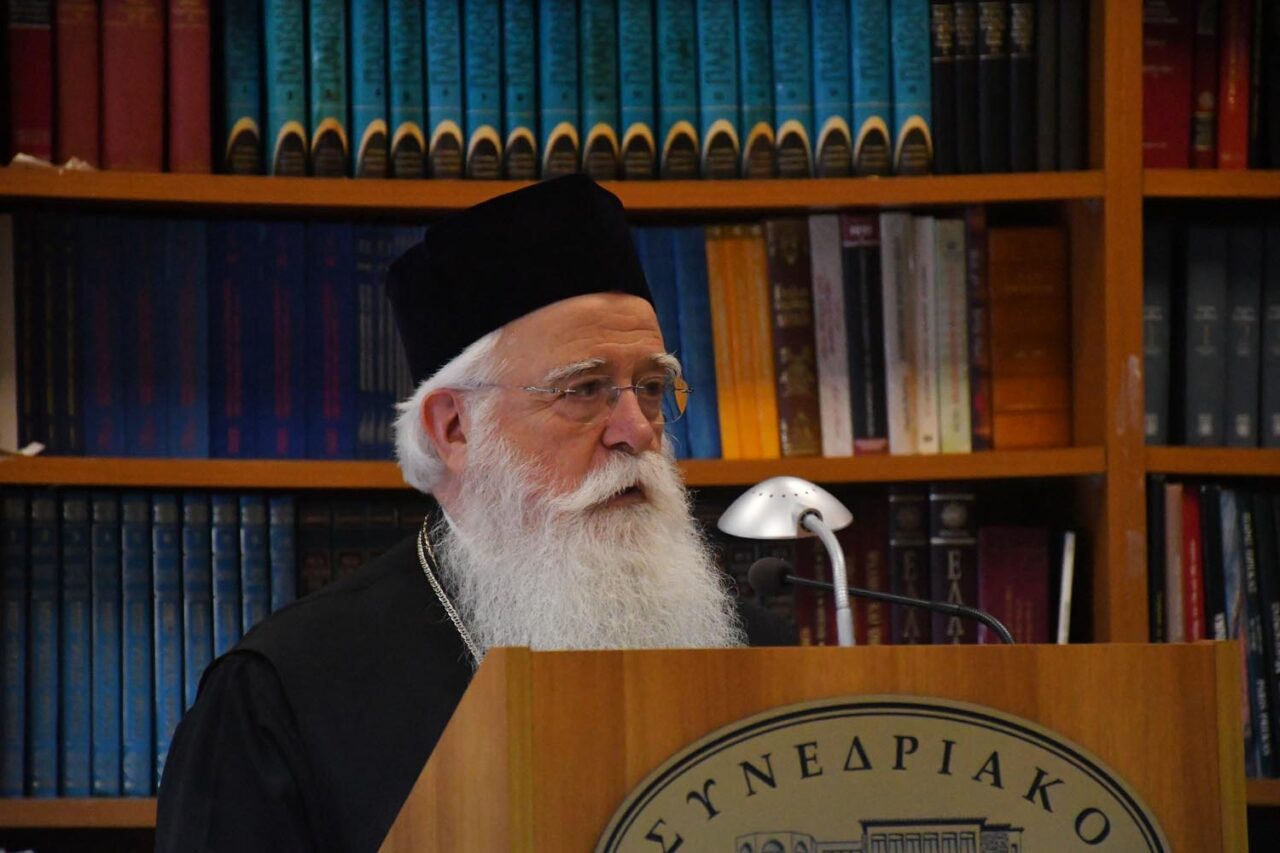
The international Conference on the topic “Food in the Anthropocene: Ecotheological and Scientific Perspectives” was held in the “Thessalia” Conference Center, Melissatika, Volos, Greece, on May 23 and 24, 2025, organized by the Volos Academy for Theological Studies.
The Conference focused on a topic that has not been discussed yet in any Orthodox context, while it is variously related to the current climate crisis (e.g. agriculture, production models, carbon emissions, lifestyle, poverty, etc.). Conference participants considered food cultures, food security, and agricultural systems as gateways to examining the dialectical relationship between ecosystems, cultural beliefs and practices, and religious cosmologies and rituals in sustaining meaningful and equitable ways of living in the Anthropocene.
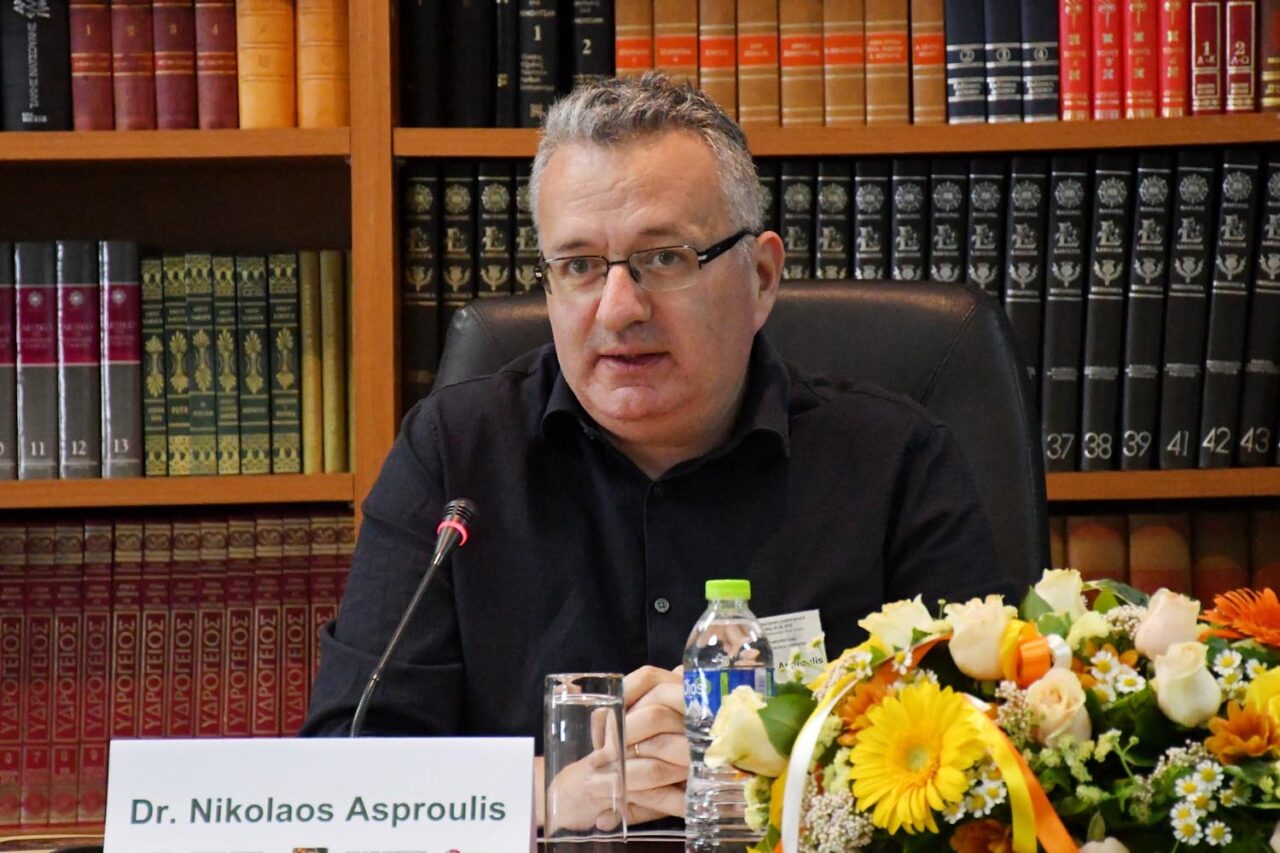
The first day, after the greeting messages of His Eminence Metropolitan Ignatius of Demetrias and the Deputy Director of Volos Academy, Dr Nikolaos Asproulis, Prof. Frances Kostarelos (Governors State University, IL, USA) spoke on farming, foodways, and cultural heritage among Orthodox Christians, arguing that theology, beliefs, and practices constitute a system of symbols, meanings, and resources for framing resilience to climate impacts threatening food security and life itself. Dr. Ekavi Issari (Hellenic Open University, Greece), spoke on the importance of sustainable wastewater management, examining modern wastewater treatment technologies and the possibilities of their reuse in agriculture, reducing dependence on conventional water resources and highlighting the importance of integrating sustainable solutions in waste management as a response to the challenges of the Anthropocene. Next in line, Rev. Dr. Peter Pavlovic (Conference of European Churches, Belgium), presented online the Challenges of Anthropocene on the Doctrine of Creation, focusing on the Anthropocene from a theological perspective, highlighting the unique opportunities it presents for re-engaging core theological concepts and arguing that the current resurgence of interest in creation theology and eco-theology calls for a renewed and convincing articulation of the connections between creation, divine revelation, and redemption. Last for the first day, Prof. Norman Wirzba (Duke University, NC, USA), presented a theological thinking about food, challenging the commodification of food, water and the rest of the resources and offering a fundamentally different way of understanding food as a sacred gift, communicating God’s love for and within this world.
The second day of the Conference started with the presentation by Prof. Ekaterini Tsalampouni (Aristotle University of Thessaloniki, Greece), who presented an ecological reading of the Christian eschatological vision of food and righteous abundance, reminding that Jesus in the Bible, both through his teachings and his actions recognizes the importance of food and responds to the material needs of people, highlighting the fair participation in it as a characteristic of the eschatological vision of the Kingdom of God. Bishop Antony (Vrame) of Synada (Holy Cross-Hellenic College, USA), pointed out the importance of food and foodstuffs as part of the Orthodox Christian liturgical and communal life, expressing his concerns about the effects of ecological challenges and climate change on these church practices. Dr. Christine Nellist (Pan-Orthodox Concern for Animals, UK), speaking online, outlined some important considerations of the animal-based diets, discussing both glocal and global issues related to the animal-based diet and its impact on climate instability, including consumption and justice, inherent inefficiency, the use of disinformation and misdirection by agents, and the absence of meaning in the death of trillions of animals each year. Prof. Chris Durante (St Peter’s University, NJ, USA), argued that the failure to correctly of the human kind to relate to the natural world has been the result of the misperception of humanity’s relationship with natural creation, illustrating how the anthropocentric ethos is causing the ecological crises and suggesting ways in which humanity may reform its current way of life. Prof. Gijsbert van den Brink (Vrije Universiteit Amsterdam, Netherlands), explored the relation of food and faith in the Anthropocene, using Protestantism as a lens for discussing how Christian faith and theology can sustain meaningful and equitable ways of relating to food. Theodoros Sdroulias (Architect, Journalist, Volos) discussed the history of the local Lake Karla from ancient times to the present, highlighting the challenges faced by this important wetland, particularly following the disasters caused by the recent storm Daniel and emphasizing the significance of the lake for the livelihoods of the surrounding communities and the need for its preservation. The last presentation, by Dr. Antonis Kalogerakis (Orthodox Academy of Crete) focused on the European Climate Pact and Food Policies, which aims to ensuring food security and sustainability, reflecting on food as a form of ecological exploitation anchored on ethical inequalities and suggesting innovative approaches, shaping a food system that is not only climate-resilient but also socially fair. During the break, there has also been a small exposition of local, environment-friendly food products.
The final session of the Conference featured a visit to the Monastery of St John the Forerunner in Anatoli, Aghia. Participants had the opportunity to hear a detailed presentation from Sister Theodekti about the Monastery’s efforts in sustainable agriculture and livestock farming, as well as the production of various goods. They also engaged in discussions with her and the other nuns about various issues related to food within the context of Orthodox monastic tradition. This session was preceded by a guided tour of the main areas of the Monastery.
The video recording of the Conference sessions is being uploaded at the YouTube Channel of Volos Academy at https://tinyurl.com/oikoengl (in English) and https://tinyurl.com/oikogree (in Greek), and the upload is expected to be completed in the forthcoming days.